In 2026, AI is no longer just about “smart chatbots” or “fast coding tools”. The biggest news story right now is that Iran has openly threatened to attack OpenAI’s planned AI data center in Abu Dhabi, UAE, called the Stargate project.
This is a big change in modern wars:
Before, targets were military bases, airports, and power plants.
Now, AI data centers, cloud systems, and digital infrastructure are also being named as possible targets.
At the same time, hackers are using ChatGPT‑style AI tools to launch massive cyber attacks every day.
This blog explains what is really happening, why it matters, and how it affects IT workers, developers, and cloud companies.

 SATVARTH
Your Tech Partner for Scalable, Smart Solutions
At Satvarth, we blend innovation with functionality to craft seamless digital experiences across platforms. Our full-stack team turns ideas into high-performing solutions.
Iran Is Now Targeting AI Data Centers – What This Means For The Whole Tech World
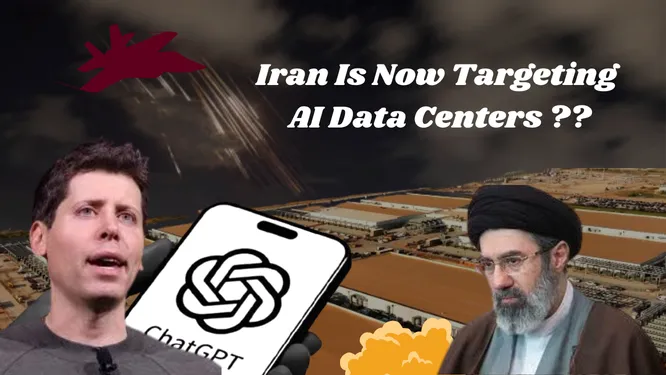
What exactly is Iran saying about OpenAI’s data center?

Iran’s military group, the Islamic Revolutionary Guard Corps (IRGC), released a video in early April 2026.
In this video, they say:
If the United States attacks Iran’s power plants, Iran will respond by “completely and totally destroying” OpenAI’s Stargate AI data center in Abu Dhabi, as well as other US‑linked energy and tech infrastructure in the Gulf.
The video also shows OpenAI, Nvidia, Oracle, Cisco, SoftBank, and Amazon as companies whose data centers or systems could be hit.
Key points:
The Stargate project is a multi‑billion‑dollar AI data center campus in the UAE.
It is supported by OpenAI, Oracle, Nvidia, SoftBank, Cisco, and UAE‑based G42.
The first phase is expected to be online by 2026, with much bigger capacity in later years.
So this is not a small rumor — it is a public, military‑level threat against an AI‑focused data center.
In this video, they say:
If the United States attacks Iran’s power plants, Iran will respond by “completely and totally destroying” OpenAI’s Stargate AI data center in Abu Dhabi, as well as other US‑linked energy and tech infrastructure in the Gulf.
The video also shows OpenAI, Nvidia, Oracle, Cisco, SoftBank, and Amazon as companies whose data centers or systems could be hit.
Key points:
The Stargate project is a multi‑billion‑dollar AI data center campus in the UAE.
It is supported by OpenAI, Oracle, Nvidia, SoftBank, Cisco, and UAE‑based G42.
The first phase is expected to be online by 2026, with much bigger capacity in later years.
So this is not a small rumor — it is a public, military‑level threat against an AI‑focused data center.
Are AI and cloud data centers really at risk?

Yes, this is not just talk.
Reports from the UAE, Bahrain, and global tech news show that:
Iranian drones have already damaged Amazon Web Services (AWS) data centers in Bahrain and the UAE, causing fires and cloud outages.
An Oracle data center in Dubai was also hit by a drone attack.
These attacks caused short‑term disruptions in banking, online services, and cloud apps in the region.
Experts now say:
Data centers are no longer “safe behind glass walls”.
They are now seen as strategic targets in modern conflicts, just like airports or power plants.
So:
AI data centers (like Stargate) are at risk.
Cloud data centers (AWS, Azure, Google Cloud, Oracle, etc.) are also at risk in conflict zones.
Reports from the UAE, Bahrain, and global tech news show that:
Iranian drones have already damaged Amazon Web Services (AWS) data centers in Bahrain and the UAE, causing fires and cloud outages.
An Oracle data center in Dubai was also hit by a drone attack.
These attacks caused short‑term disruptions in banking, online services, and cloud apps in the region.
Experts now say:
Data centers are no longer “safe behind glass walls”.
They are now seen as strategic targets in modern conflicts, just like airports or power plants.
So:
AI data centers (like Stargate) are at risk.
Cloud data centers (AWS, Azure, Google Cloud, Oracle, etc.) are also at risk in conflict zones.
How is ChatGPT‑style AI being used in cyber attacks?

Another big angle of this story is AI‑powered hacking.
According to cybersecurity and government reports from the UAE and other countries:
Hackers linked to Iran are sending hundreds of thousands of cyber attacks every day.
Many of these attacks are powered by AI tools and large language models (LLM) similar to ChatGPT.
These AI tools are used to:
Write very realistic phishing emails and fake messages.Create fake login pages and websites that look real.Generate better malware and hacking scripts automatically.
At the same time:
AI‑based security systems in the UAE claim they are blocking about 500,000 attacks per day.Without AI on the defence side, human teams could not manage this volume of attacks.
So AI is now:
A weapon for attackers (to make stronger hacks).A tool for defenders (to detect and block attacks fast).
According to cybersecurity and government reports from the UAE and other countries:
Hackers linked to Iran are sending hundreds of thousands of cyber attacks every day.
Many of these attacks are powered by AI tools and large language models (LLM) similar to ChatGPT.
These AI tools are used to:
Write very realistic phishing emails and fake messages.Create fake login pages and websites that look real.Generate better malware and hacking scripts automatically.
At the same time:
AI‑based security systems in the UAE claim they are blocking about 500,000 attacks per day.Without AI on the defence side, human teams could not manage this volume of attacks.
So AI is now:
A weapon for attackers (to make stronger hacks).A tool for defenders (to detect and block attacks fast).
What this means for IT companies and cloud providers.

For big tech companies like OpenAI, AWS, Oracle, Microsoft Azure, and Google Cloud, this situation is very serious.
Here are the main effects:
a) Physical security is now more important
Data centers used to care about cooling, uptime, and network speed.
Now they must also care about missiles, drones, and physical attacks.
Many data centers are adding:
Extra security guards and checkpoints.
Military‑style cameras and sensors.
Stronger power backups and fuel storage.
b) Cybersecurity budgets are rising fast
Companies are spending more on:
AI‑driven threat detection systems.
24/7 incident response teams.
Secure access models like zero‑trust and strict multi‑factor authentication.
c) Governments are treating AI and cloud as “critical infrastructure”
Countries like the UAE, US, India, and EU now see AI and cloud data centers as national security assets, not just business tools.
This means:
More strict rules on where data can be stored.
More audits and security checks.
More focus on local data‑center growth (like India building more AI and cloud hubs).
Here are the main effects:
a) Physical security is now more important
Data centers used to care about cooling, uptime, and network speed.
Now they must also care about missiles, drones, and physical attacks.
Many data centers are adding:
Extra security guards and checkpoints.
Military‑style cameras and sensors.
Stronger power backups and fuel storage.
b) Cybersecurity budgets are rising fast
Companies are spending more on:
AI‑driven threat detection systems.
24/7 incident response teams.
Secure access models like zero‑trust and strict multi‑factor authentication.
c) Governments are treating AI and cloud as “critical infrastructure”
Countries like the UAE, US, India, and EU now see AI and cloud data centers as national security assets, not just business tools.
This means:
More strict rules on where data can be stored.
More audits and security checks.
More focus on local data‑center growth (like India building more AI and cloud hubs).
What this means for IT workers and developers.

If you are an IT engineer, developer, or student in tech, this news is not just “world politics”. It affects your skills, your job, and your future.
a) Security skills are becoming more valuable
If you know:
Cloud security (AWS / Azure / Google Cloud).
Network security and incident response.
Zero‑trust and secure‑access design,
then your profile will be in high demand, even if other IT jobs feel slow.
b) AI security is now a big field
Companies need people who understand:
How AI models handle data (privacy and data leakage).
How hackers can misuse tools like ChatGPT.
How to build safe, fair, and secure AI systems.
c) Cloud, AI, and data‑center roles are still growing
Even though some traditional IT service jobs are under pressure, other areas are growing:
Cloud engineers
Network and infrastructure engineers
Cybersecurity experts
AI/ML developers
Countries like India are building more data centers and AI hubs, so these jobs will continue to grow.
a) Security skills are becoming more valuable
If you know:
Cloud security (AWS / Azure / Google Cloud).
Network security and incident response.
Zero‑trust and secure‑access design,
then your profile will be in high demand, even if other IT jobs feel slow.
b) AI security is now a big field
Companies need people who understand:
How AI models handle data (privacy and data leakage).
How hackers can misuse tools like ChatGPT.
How to build safe, fair, and secure AI systems.
c) Cloud, AI, and data‑center roles are still growing
Even though some traditional IT service jobs are under pressure, other areas are growing:
Cloud engineers
Network and infrastructure engineers
Cybersecurity experts
AI/ML developers
Countries like India are building more data centers and AI hubs, so these jobs will continue to grow.
(345)